
From a Seattle Classroom to Mexico City Shelters
- Kim Perkins

- Apr 25
- 5 min read
How one school community turned conversation into action
By Kim Perkins
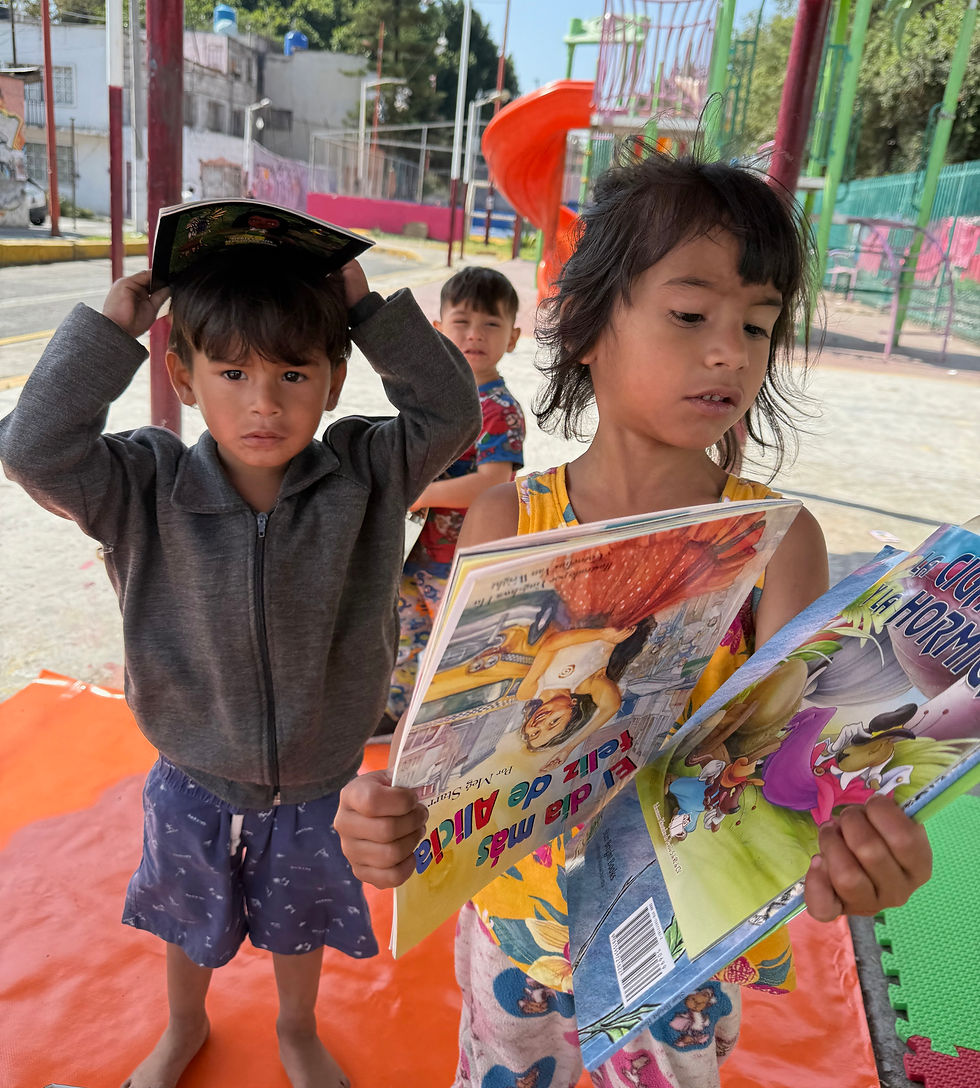
Somewhere between a fourth-grade classroom in Seattle’s University District and a migrant shelter in Mexico City, a thread of connection took hold.
It did not begin with a fundraising campaign or a corporate initiative. It began with a quiet conversation between two moms on a school camping trip.
Turn on the news and the world can feel heavy, which is why it feels almost radical to tell a story about something quietly, stubbornly good.
So, let me tell you one.
In Seattle’s University District, where the rhythm of academic life hums through tree-lined streets and coffee shops hold half-formed ideas, there is a small elementary school that weaves community into the fabric of its existence, allowing us to hold onto what is good in the world—and extend that good beyond our borders.
The University Cooperative School sits just beyond the orbit of the University of Washington, but carries the same spirit of inquiry—only here, the subject of study is community itself.
I have a fourth grader there. And when I’m not volunteering on biking trips or assembling overly ambitious nature projects, I split my time between flying airplanes and studying resilience at UW—how individuals and systems adapt under stress. In aviation, resilience is engineered. It is procedural, measured, and built to anticipate failure.
At the Co-op, I found a different kind of resilience – one that takes root in the soil of real relationships, tended by people who choose, again and again, to center community.
I saw this kind of human resilience unfold on a school camping trip. Late at night, the kids were asleep, the last half-eaten s’more cleared away, and the world had softened into quiet. I found myself talking with another co-op mom. It began as small talk, but like the best conversations, it didn’t stay there. We found our way to the topic of volunteer work, to humanitarian efforts, and I told her about Rise Up and Read -- a Seattle-based nonprofit that builds libraries in migrant encampments along the migration route from the Darién Gap to the U.S. border.
The work is grounded in something research has confirmed, but mothers have always known – that reading aloud to a child is an act of healing. It lowers stress hormones. It restores calm. It stitches together a sense of continuity when everything else has come undone. To these kids along the migration route, in a shelter made of plywood and tarp, a book is not just a comfort item. It is medicine.
I told her about the working moms who saw the need and formed this nonprofit. Who pack books and carry them across borders. About the mothers building makeshift libraries in the dust beside railroad tracks in the overlooked neighborhoods of Mexico City — showing up, again and again, with nothing more than paperbacks and presence.
She listened. And then she mobilized her corporate network, rapidly turning relationships into resources.
Within weeks, those resources turned into money that allowed five libraries to exist in Mexico City encampments where none had been before. Children from Angola, from Venezuela – from places most of us will only ever read about – came out of makeshift shelters and sat together in the open air and read. They did the most ordinary thing. And in that ordinariness, there was something deeply restorative.
One conversation. Hundreds of children.
But the story didn’t stay in Mexico City. It found its way into a classroom at the University Cooperative School. Third- through fifth-graders listened as we talked about children who had fled their homes with nothing but the clothes on their backs. I explained that we had to be thoughtful about what books we brought – because for children in shelters, camping stories don’t offer escape when your life is already lived in a tent. I shared what I had seen: the way kids gathered around books, the way they lingered. And when it was time for questions, the room shifted. The hands of these 8-10 year-old kids went up immediately.
“How can we help?”
—---
I keep reflecting on this experience within my work on resilience. We tend to study resilience as a property of isolated systems — how a structure holds under pressure, how an individual recovers from loss. But what I have witnessed at co-op, and now through Rise Up and Read, is resilience of a different order. It lives not inside a single person or structure, but in the space between people. It is relational. It is sustained not by protocol, but by the daily, unglamorous decision to remain in relationship with the world beyond your own front door.
Women know this territory well. We’ve been navigating it, without recognition, since likely forever – doing the work, naming none of it, and watching it get rebranded as invisible. It’s the capacity to hold complexity, to anticipate what is needed before it is asked for, to coordinate across competing demands and still find room for one. more. thing. Nobody asked us to keep showing up. We just never stopped.
This is not incidental. It is not a personality trait. It is a form of intelligence that operates as power, honed by necessity, that the world has long benefited from and rarely bothered to name.
We have a habit of overlooking this kind of power — the power that lives in conversation, in coordination, in care. Perhaps because it has so long been dismissed as simply what women do. It is time to call it what it actually is: leadership.
What happened between two women on the co-op camping trip was not a coincidence or a happy accident. It was inevitable. When you build a resilient system on genuine human connection, and fill it with women who have spent their lives learning to hold more than their share – this is what happens. This is what has always happened. We just rarely write it down.
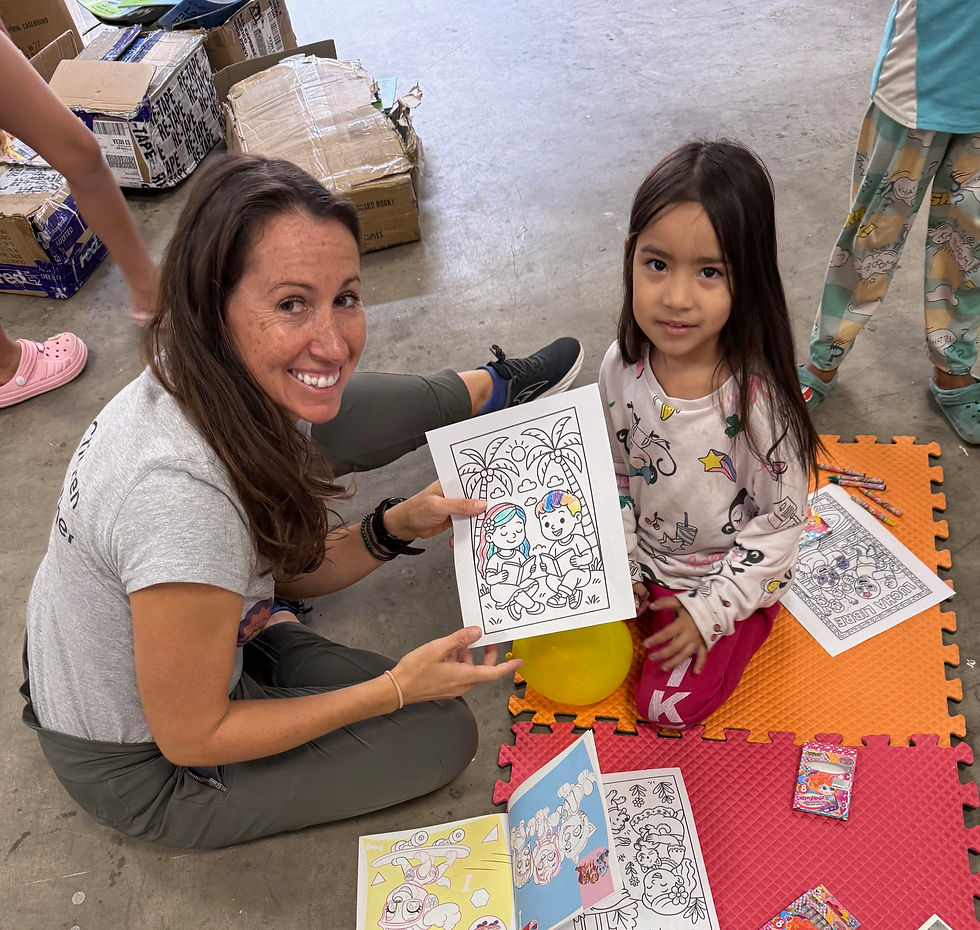
Somewhere in Mexico City, a child is reading a book. She does not know about a small school in Seattle's University District, or the camping trip, or the campfire that burned low while two mothers talked. She does not know that the library around her was built by women who were already doing too much and chose to do this anyway. She doesn't need to know. The thread is holding. And somewhere, right now, another conversation is beginning.
The author is a B787 airline pilot, Research Scientist at the University of Washington, a volunteer with Rise Up and Read, and the mother of two daughters — one of whom is a fourth grader at the University Cooperative School.


Comments