
Changing Demographics on the Migrant Trail
- Susanna Block

- Feb 6
- 2 min read
Updated: Feb 6
Mexico City, February 2026

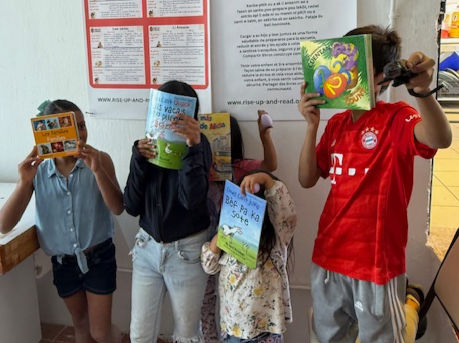
Migration isn’t an abstract policy debate, it’s a lived experience for millions of families and children, one that is constantly shifting in response to global pressures and changing policies. Last week, the team from Rise Up & Read, a nonprofit dedicated to supporting literacy and attachment by bringing libraries and shared reading to children in migrant encampments and centers, returned from Mexico City. During this visit, we strengthened our partnerships with migrant centers where we have established libraries, hosted pop-up libraries with story time, and continued to bear witness to the lived realities of children and families caught in the midst of the migrant crisis in Mexico.
One of the most striking aspects of this trip was the changing demographic landscape we encountered. While many families and children continue to come from Venezuela, Colombia, and Central America, regions long affected by insecurity and economic collapse, we are increasingly meeting children whose families have been deported from the United States. Some of these children shared with us that they were born in the U.S., yet now find themselves living without stable shelter or services in Mexico. This reality brings home, with acute clarity, how immigration policy reverberates far beyond borders, shaping the life trajectories of families in profound and deeply human ways.

For these deported families, there is often no ready safety net. After removal from the United States, individuals and families frequently end up in migrant centers, including those operated by the Mexican government or by faith-based institutions, but many more find themselves in tent encampments without basic services or infrastructure. For children, this means spending formative years in unstable, resource-scarce environments while trying to make sense of lives uprooted by policies implemented thousands of miles away. The fluidity and complexity of migration make precise demographic tracking extremely difficult. Many of the centers RuaR is partnering with are now bracing for continued arrivals from the US, Cuba, Venezuela, and Haiti.
We will continue to bring books, story times, and presence to these children who are living through a stressful and non-typical childhood. One boy we met told us simply, “Reading makes me feel calm,” and that testimony is at the heart of why we will keep showing up. Moments of connection, reassurance, and shared story can provide a foundation of resilience even in the hardest of times.


Comments